
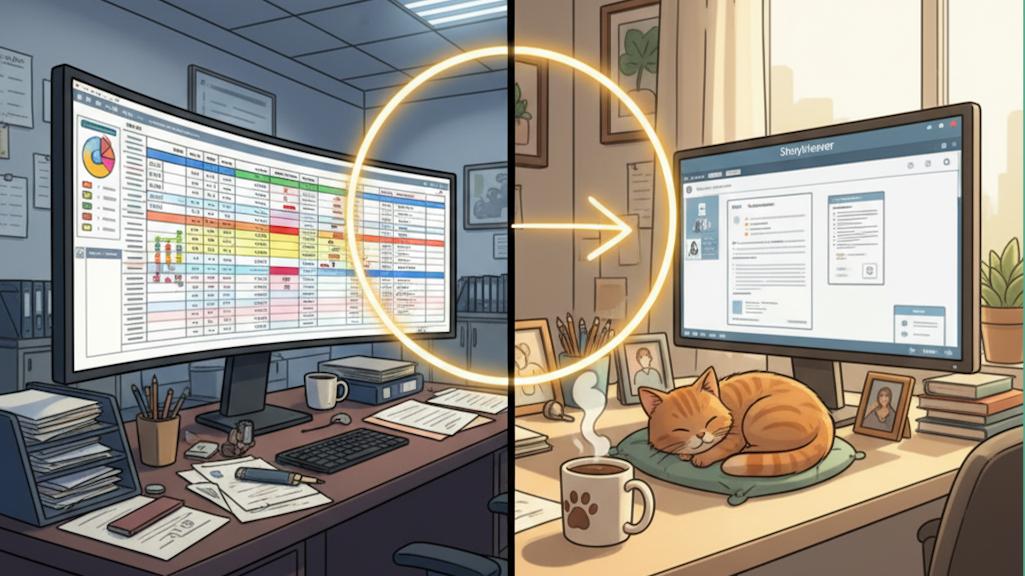
Welcome to my first blog post! My name is Paloma, and my professional journey has given me a unique perspective on the translation industry. That’s because I worked for two years as a project manager (also known as PM) at a translation agency before embarking on my current career as a freelance translator.
As a result, being part of the project management team at a translation agency gave me the opportunity to see firsthand what goes on behind the scenes. Now, as a freelancer working on the other side, I can use all the lessons I learned in my day-to-day work. Let me tell you a little more about everything I’ve learned.
Lesson one: being organized is essential (both as a PM and as a freelance translator)
There’s no denying it, life as a project manager is tough. From managing impossible deadlines and adapting to client expectations to coordinating with several freelancers with different language combinations and negotiating budgets… All at the same time. Sounds a bit intense, right? The truth is, it is, and it’s a job that requires a lot of mental agility.
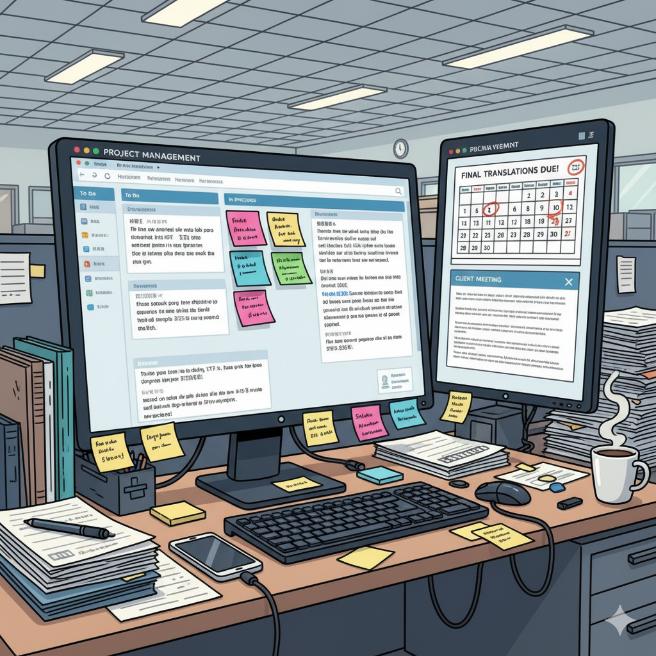
The project manager’s survival kit
Throughout my time in project management, I feel that what I learned most was how to organize myself when it comes to priorities and schedules. In fact, this skill has proven to be the most useful in my life as a freelance translator. Keep in mind that to manage projects, you have to be perfectly organized: you have to keep track of deadlines, coordinate translators and proofreaders, allow time for QA, etc.
You also have to be proactive and anticipate problems before they happen. For example, if a project with many language combinations came in, I knew I had to contact my trusted translators as soon as possible (and have a few more professionals up my sleeve, just in case).
So, developing these skills during my time as a project manager has really helped me learn how to manage my time as a freelance translator. Every experience is a learning opportunity!
The freedom of working as a freelancer
Now, I can use those skills to manage my own schedule at my own pace. I can organize my day to work during my most productive hours (the earlier I start, the better for me!). In fact, right now, I’m writing this with my two cats asleep on my lap while I drink my coffee from my favourite anime mug. That’s not something you can do in an office, and this freedom is priceless!
Well, it has a price, relatively speaking. As a freelancer, if I don’t work, I don’t earn money. In other words, I don’t have paid holidays, as I did before. Sick leave isn’t exactly the easiest thing to deal with either. Because if there’s one absolute truth for a freelancer, it’s that time is money, and all your free time is money you’re not earning.
Lesson two: the truth about communicating with clients and deadlines
The pressure on project managers
I understand that, as a freelancer, when a project manager requests a very tight deadline or offers you a lower rate than your usual rate, it can be upsetting. However, it is important to understand that this is rarely the PM’s fault.
Often, they are simply working with what the client has asked for and are doing their best to ensure that the project is completed on time and within budget. They are not doing it to upset you, they have no other choice. As a freelancer, you can accept or reject the job, it’s your call.
Therefore, the job of a project manager is stressful. Sometimes, you have to request things you would rather not ask for or find a way to get yourself out of a tight spot. I still remember frantically searching ProZ or LinkedIn for professionals who could help me with a difficult project. It’s something I don’t miss about project management!
That’s why, now that I’m on the other side, I try to reply as quickly as possible to PMs who contact me. I know I could be taking a weight off their shoulders by letting them know they already have a language combination secured. Plus, I remember seeing a message pop up saying “I’m available!” and feeling a great sense of satisfaction; one less thing to worry about.

As a freelance translator, I definitely have more freedom when choosing my clients and their projects. One of my biggest sources of stress when I was a PM was seeing a message from a client pop up at the last minute. Bear in mind that, as a project manager in a translation agency, you can’t say no to a project; it’s not your place to decide. So, I had to email all the translators and pray that first thing the next morning I would have several “I can do it!” responses. And that’s if the deadline was long enough to wait until the next day.
Now, if I’m too busy or a project doesn’t fit with the services I offer, I can say no. Do I usually say yes to my trusted clients or PMs, even if I’m busy? Yes, the truth is that I have to be very, very busy to turn down work from a trusted client. I always try to make time for them. But now, it’s my decision; no one is forcing me to do it.
Freelancers have more options
Lesson three: the importance of being remembered
When I was a project manager, I obviously had my favourite translators and proofreaders. They were professionals for whom I would move mountains (or in this case, deadlines) so that they could take on the job. Their consistently high-quality work gave me peace of mind, knowing that I would receive translations or revisions that were practically perfect.
What’s more, one of my greatest satisfactions was getting to know the freelancers I worked with regularly. When a project gave me the opportunity to do something for them, such as offering very generous deadlines or higher-than-usual rates, I was happy to do so. They made my life easier, and I liked to return the favour!
The scariest thing about being a freelance translator
Despite this, now that I am a freelance translator, I have realized one thing: you can easily be forgotten. All it takes is a holiday or sick leave for the project manager to find someone else. Just like that. Keep in mind that there are thousands of talented professionals out there, and if a manager needs someone to do your job, they will find them.
That’s what’s most frightening, knowing that taking time off can mean your regular projects will be assigned to someone else. That fear is one of my motivations for ensuring I always deliver impeccable work and maintain open communication. I want to remain the first choice when I return to work.

In a nutshell, every world has its perks, and there’s something to learn from everything
The freedom of being a freelance translator is unmatched, and not just because you get to work from home. It’s the fact that you can decide which jobs to take on and which to turn down, that you can take time off when you need it, and that you can organize your schedule however suits you best.
On the other hand, the stability of a project manager is also unmatched. Having a guaranteed monthly salary is something you miss when you’re self-employed.
Life as a project manager taught me the mechanics of the translation industry, how communication with clients and freelancers works, how to organize myself, and how to manage my time. Life as a freelance translator has taught me the true value of my time, my experience, and the freedom that comes with it.
empathize more with project managers, organize myself efficiently and, most importantly, adapt to my clients, as I know their experiences on the other side.